

Wedding Day Timeline: The Ultimate 2026 Stress-Free Guide

Article by
Gabi
Hi, I'm Gabi - Co-Founder of Bestever Pics. Thanks for visiting our blog. We are working hard to produce content which we hope resonates with you. Feel free to drop us a line on socials or via the contact form on the site.
The most expensive mistake you can make is treating your wedding day timeline as a rigid set of rules rather than a tool for guest engagement. While 72% of couples book photographers nearly a year in advance to lock in 2026 pricing, even the best professional can't be everywhere at once. You need a schedule that balances high-end professional shots with the raw, authentic energy of your friends and family.
It's exhausting to feel like you're constantly chasing the clock instead of enjoying the party you spent $34,200 to host. We'll show you how to build a 2026-ready schedule that eliminates vendor friction, clarifies why day-of coordination is actually a month-long process, and keeps your guests entertained. We're breaking down exactly when to start prep and how Bestever.pics helps you collect every guest's perspective instantly to transform your planning anxiety into pure confidence.
Key Takeaways
- Build a wedding day timeline that anchors your ceremony as the priority while leaving plenty of room for authentic guest interactions.
- Use the 15-minute rule for every transition and plan three minutes per family photo to avoid a frantic mid-day rush.
- Balance professional vendor cues with a simplified guest-facing schedule to keep your friends and family informed and relaxed.
- Unlock the unseen parts of your day by using tools that let guests upload candid photos the moment they happen.
Why Your Wedding Day Timeline Needs More Than Just Professional Cues
Your wedding day timeline acts as the heartbeat of your celebration. It's the difference between a day that feels like a choreographed performance and one that flows naturally. Most traditional schedules focus entirely on professional vendor cues, like when the catering staff needs to fire the ovens or when the photographer starts the first look. While these logistical markers are vital, they often treat the guest experience as an afterthought, leading to awkward lulls and missed connections.
Planning for the "unseen" moments ensures you capture the laughter during the hen and stag dos or the quiet ceremony tears. Don't let your schedule become a straightjacket that stifles the energy of the room. Instead, use your plan to bridge the gap between structured photography and the spontaneous, candid memories that your friends and family will create. A great schedule gives you the freedom to be present while ensuring the big milestones happen on time.
The Definition of a Modern Wedding Schedule
Forget the idea of a rigid script. A modern wedding day timeline is a fluid document that adapts to the energy of your celebration. We call the space between professional shots the "Candid Gap." This is where the real magic happens, like the messy laughter during morning prep or the quiet, unposed moments between Wedding traditions and customs. Using digital tools like Bestever.pics allows you to capture these spontaneous memories in real-time, ensuring the story of your day is told from every angle, not just the one behind a professional lens.
Bridging the Gap Between Pros and Guests
Your professional photographer is an artist, but they can't be everywhere at once. They're focused on the high-stakes milestones while your guests are witnessing the small, hilarious, and heart-wrenching details. When a schedule feels too stiff or over-produced, guests often stop taking photos because they feel like they're in the way. You want to keep that creative momentum high throughout the event. By integrating digital photo sharing modern events into your plan, you give your friends and family a clear role in the narrative.
- Capture the energy of the morning prep before the main event.
- Document the "behind the scenes" chaos of the bridal party getting ready.
- Collect the table-side selfies that a pro would never have time to take.
- Ensure the quiet, emotional reactions of your parents are preserved forever.
This approach transforms your guests from passive observers into active participants. It removes the friction of traditional planning and ensures that when you look back, you see the whole story. You'll have the polished professional gallery, but you'll also have the raw, authentic life that happened in between the poses.
The Anatomy of a Perfect Wedding Day Schedule
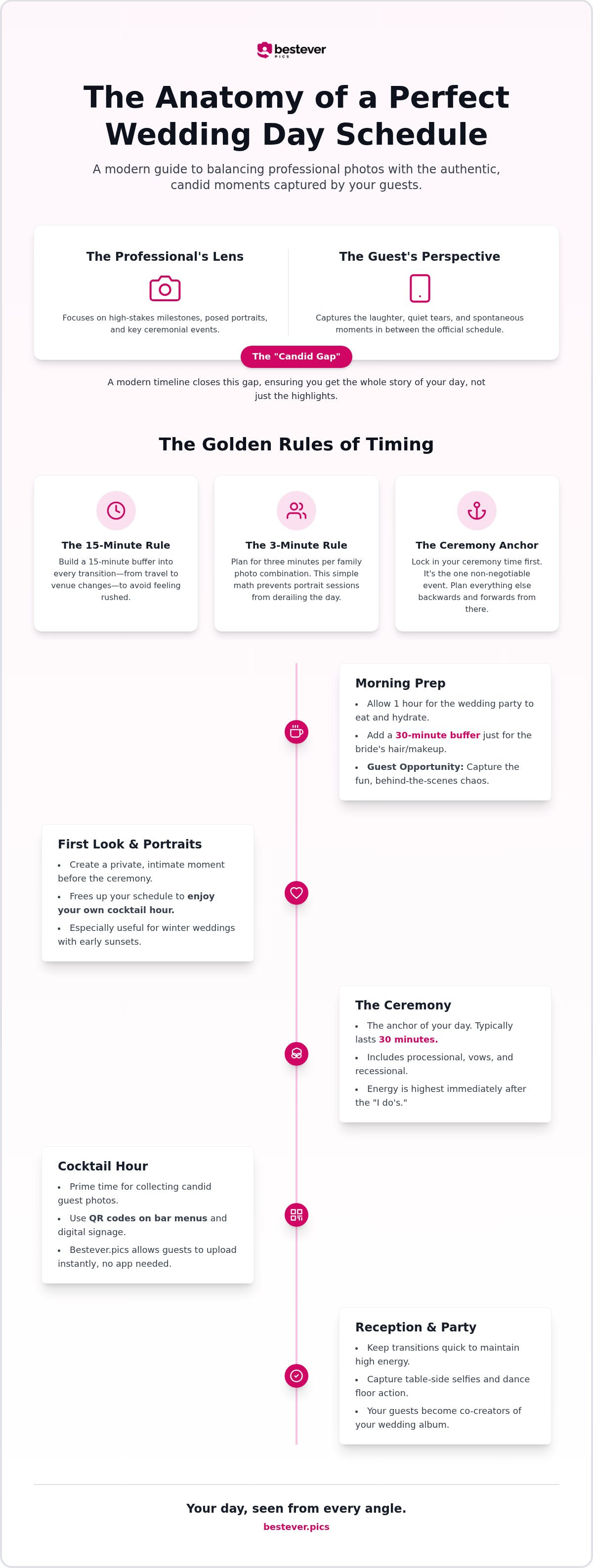
Designing a wedding day timeline requires a balance of logic and emotion. You start with the one thing you can't move: your ceremony time. Once that's locked in, you can work backward to the morning and forward to the party. It's the skeleton that supports all your other vendor bookings and guest expectations.
Morning Prep and the First Look
The morning often sets the tone for the entire day. Don't skip breakfast. Ensure your bridal party and groomsmen have at least an hour to eat and hydrate before the energy picks up. When scheduling hair and makeup, always include a 30-minute buffer specifically for the bride. This prevents a domino effect if one bridesmaid's hair takes longer than expected.
A first look is a private, intimate moment where the couple sees each other for the first time before the public ceremony begins. This is particularly beneficial for winter weddings where natural light disappears early. By finishing your portraits before the ceremony, you free up your schedule to actually attend your own cocktail hour. It's a trade-off that pays dividends in social time later.
The Ceremony and Cocktail Hour Flow
A standard ceremony usually lasts about 30 minutes, which is a key anchor for your wedding day timeline. This includes the processional, the vows, and the high-energy recessional walk. Once the "I dos" are finished, your guests are ready to celebrate. This transition into the cocktail hour is the prime time for qr-codes-wedding-photo-sharing setups. Guests are buzzing with excitement and usually have their phones out already.
- Place QR codes on bar menus to catch guests while they wait for a drink.
- Use digital signage to remind everyone to upload their ceremony snaps.
- Keep reception transitions quick to maintain high energy for the first dance.
By making the memory collection part of the activity, you turn a potential lull into a highlight. You can even set up a private wedding photo gallery so guests can see each other's uploads while they mingle. This keeps the momentum building right into the reception and the party that follows.
Essential Buffer Times and How to Avoid the Mid-Day Rush
If your wedding day timeline feels like a race, you've already lost. The secret to a relaxed atmosphere isn't doing more; it's doing less with better timing. Apply "The 15-Minute Rule" to every transition. Whether you're moving guests from the ceremony pews to the reception bar or shifting the bridal party for photos, that extra quarter-hour prevents the frantic panic of wondering where everyone has gone.
Family formals are a notorious time sink. While some guides claim you can breeze through them in 15 minutes, the reality of wrangling 30 relatives is different. Plan for three minutes per group combination. This accounts for the time it takes to find Uncle Bob, adjust a tie, and get everyone to look at the lens at the same time. Immediately after the ceremony, carve out 10 minutes of "hidden time" just for you and your partner. Use this to breathe, share a glass of champagne, and actually process that you're married before the social whirlwind begins.
Managing Large Group Logistics
Wrangling 200 plus guests requires more than just a loud voice. Give your maid of honour a specific checklist of family members to find before the photos start. The layout of your venue also dictates the speed of your wedding day timeline. If the ceremony and reception are on opposite ends of a large estate, you'll need longer buffers. Pro planners often use scalable digital systems to manage these transitions, ensuring that even with a huge guest list, nobody feels like they're being herded like cattle.
Accounting for Travel and Unexpected Delays
Travel is where most schedules fall apart. Always add a 20% margin to whatever your GPS tells you. Loading a bridal party into a limousine or bus is a hidden time sink that usually takes 15 minutes longer than you'd expect. Build a dedicated "buffer block" into the hour before your ceremony starts. This gives you space to handle last-minute florist questions or decor tweaks without cutting into your portrait session. If hair and makeup runs late, this buffer acts as your insurance policy, keeping the rest of your day on track.
Coordinating Your Vendors and Guests Without the Stress
Clear communication prevents chaos. Distribute a simplified "Guest Version" of your wedding day timeline via your wedding website or digital signage. It saves trees and ensures nobody is lugging around paper they'll lose by the second glass of bubbly. Providing vendors with a "Master Version" that includes load-in times and specific contact details ensures you aren't the one answering logistical questions while you're getting ready.
There's a clear trade-off here. A detailed plan requires some upfront work, but it saves you hours of stress on the actual day. You're building a system that runs itself so you can focus on the celebration. Using digital tools to keep everyone informed removes the friction of app downloads and keeps the momentum high.
The Master Vendor Itinerary
Every vendor has different priorities. Your caterer needs to know exactly when the speeches start to time the meal service, while your florist just needs a clear setup window. Using a central digital hub for updates keeps everyone on the same page if the schedule shifts. For Pro subscribers managing multiple events, Bestever.pics acts as a live feed. It lets planners see the day unfolding through guest uploads, allowing them to adjust the flow in real time without constantly checking their watches.
Engaging Guests in the Schedule
Don't let your guests guess what's next. Use creative signage to highlight big moments like the cake cutting or the grand exit. This keeps energy high and prevents people from drifting off during transitions. Integrating modern wedding photo sharing into these lulls gives guests something fun to do while they wait for the reception to open. Clear announcements from your MC are the final piece of the puzzle to keep the flow moving without feeling forced.
Closing the Loop: Capturing the Unseen Moments of Your Timeline
The wedding day timeline doesn't stop when the getaway car pulls away. Post-event memory collection is the final, vital piece of your schedule. Professional photographers provide stunning art, but those galleries often take weeks to arrive. Guest photos offer instant gratification. You'll have a mountain of memories to scroll through while you're eating brunch the next morning. It's the perfect way to relive the energy before the honeymoon starts.
Authentic emotions often hide in the candid shots taken from a guest’s perspective. While the pro captures the formal kiss, your best friend captures the look on your mum's face from the third row. These are the "unseen" moments that make your celebration feel complete. Encourage everyone to upload throughout the night so your digital archive is ready the second you wake up. This ensures no memory is left behind on a guest's camera roll.
The Digital Guestbook Evolution
Traditional physical guestbooks usually end up in a drawer gathering dust. A live-updating digital gallery is the evolution of the guestbook. It creates a narrative of the day from a hundred different angles. You get to see the table jokes, the late-night dance floor chaos, and the quiet moments you missed. This multi-angle perspective is something a single photographer simply can't replicate. Share the gallery link the next morning with friends who couldn't attend. It's a thoughtful way to let them experience the celebration from afar.
Why an App-Free Experience Wins
Asking guests to download software during a celebration is a major mood killer. It creates unnecessary friction that stops people from sharing. Bestever.pics uses simple QR codes to ensure everyone can join in regardless of their tech skills. This ensures maximum participation from all age groups, from your tech-savvy cousins to your grandparents. You want the photos, not the technical support headaches. It's the simplest way to ensure your memories are preserved without the clutter of physical waste or app store hurdles.
By removing the barriers to entry, you invite more creativity into the fold. Guests feel like participants rather than spectators. This leads to a richer, more diverse collection of photos that truly reflects the spirit of the day. You'll treasure these raw, unposed shots just as much as the professional portraits.
Capture every candid moment of your wedding day timeline with bestever.pics
Take Control of Your 2026 Celebration
A flawless wedding day timeline is about more than just hitting marks. It's about creating the breathing room to actually enjoy the milestones you've spent months planning. By applying the 15-minute buffer rule and prioritizing guest engagement, you transform a rigid schedule into a vibrant, living story. You've worked hard to coordinate every detail; now it's time to ensure those memories aren't lost in the "candid gap" between professional shots.
Capturing the raw energy of your party doesn't have to be a technical hurdle. Bestever.pics eliminates the friction of app downloads, allowing for unlimited guest uploads and an instant digital album. You'll wake up to a complete narrative of your day, seen through the eyes of the people who love you most. It's the ultimate way to close the loop on your celebration and start your new chapter with every laugh and tear preserved forever.
Your wedding is a once-in-a-lifetime event. Make sure you don't miss a single second of the magic.
Frequently Asked Questions
What is a typical wedding day timeline for a 6 PM ceremony?
A 6 PM ceremony usually requires a start time around 10 AM for hair and makeup. You'll want to schedule your first look for 3:30 PM to ensure you capture portraits in the best natural light. This allows the bridal party to finish photos by 5 PM, giving you an hour to freshen up before the "I dos." Following the ceremony, your reception can kick off at 7 PM for a seamless transition into dinner.
How much time should I allow for hair and makeup for 6 bridesmaids?
You should budget at least 45 minutes per person for hair and makeup, plus a 30-minute buffer for the bride. For six bridesmaids, this equates to roughly five hours of total prep time. Starting at 10 AM ensures nobody feels rushed if a specific style takes longer than planned. It's much better to finish early and relax with a glass of bubbly than to scramble while the photographer is waiting.
Is a first look necessary for a smooth wedding day schedule?
While not mandatory, a first look is a powerful tool for a smooth wedding day timeline. It allows you to complete most formal portraits before the ceremony, freeing you up to join your guests for the cocktail hour. This is especially helpful for winter weddings where natural light fades quickly. You'll get more social time and a private moment together before the public celebration begins, reducing your overall stress.
How long should the cocktail hour actually last for guest comfort?
Sixty minutes is the perfect duration for a cocktail hour to keep guests comfortable and engaged. It provides enough time for everyone to grab a drink and mingle without the energy dipping. If your photos are taking longer, you can stretch it to 90 minutes, but you'll need to provide extra hors d'oeuvres. Keeping this window tight ensures a high-energy entrance for your reception and the first dance of the evening.
What happens if the wedding timeline runs 30 minutes late?
Don't panic if you run 30 minutes behind; your built-in buffers are designed for this exact scenario. Your coordinator or MC can trim 10 minutes from the cocktail hour or ask the caterer to delay the main course slightly. Most guests won't even notice a minor shift if the drinks are flowing. Focus on the big milestones and let the smaller transitions absorb the delay to keep the party moving forward.
How do I share the wedding schedule with my guests without being pushy?
The best way to share your schedule is through subtle digital touchpoints like your wedding website or a simple QR code on your programs. This keeps everyone informed without the need for bulky paper itineraries. You can also use elegant signage at the venue entrance to highlight key moments like the cake cutting. It feels like a helpful guide rather than a strict set of rules that guests must follow.
When should the wedding photographer arrive and depart?
Most photographers arrive about 90 minutes before the first look to capture those final "getting ready" moments. This gives them time for detail shots like the dress and rings. They typically depart shortly after the main reception events, such as the cake cutting or the first few songs of the dance set. An 8-hour package is usually sufficient to cover the most vital parts of your wedding day timeline effectively.
How can I collect guest photos throughout the day without an app?
You can collect every candid shot instantly by using Bestever.pics QR codes displayed throughout your venue. Guests simply scan the code with their phone camera and upload their photos directly to your digital album. There's no app download required, which means even your less tech-savvy relatives can participate. It's the most efficient way to see the "unseen" moments of your day without the friction of traditional photo-sharing methods or software hurdles.